- Teacher: Alexander Hanhart
Macalester Moodle
Search results: 370

- Teacher: Michael Anderson
- Teacher: Jerald Dosch
- Teacher: Lola Leckey
- Teacher: Simone Maddox
References and information for student workers in the Civic Engagement Center.
- Teacher: Ruth Janisch
- Teacher: Derek Johnson
- Teacher: Sedric McClure
- Teacher: Rachel Weeks
- Teacher: Samuel Wegner
- Teacher: Robert Angarone
- Teacher: Andrew Beveridge

- Teacher: Takeo Kuwabara

- Instructor: Alyssa Lawrence

- Teacher: Serdar Yalçin

This course qualifies for the U.S.I.D. or Internationalism designation.
- Teacher: Hilary Chart

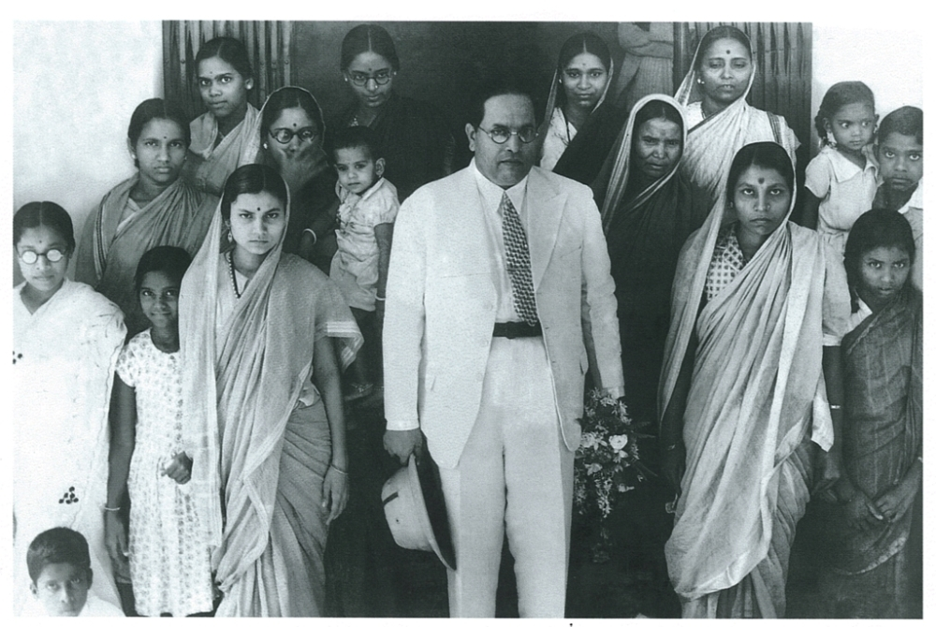
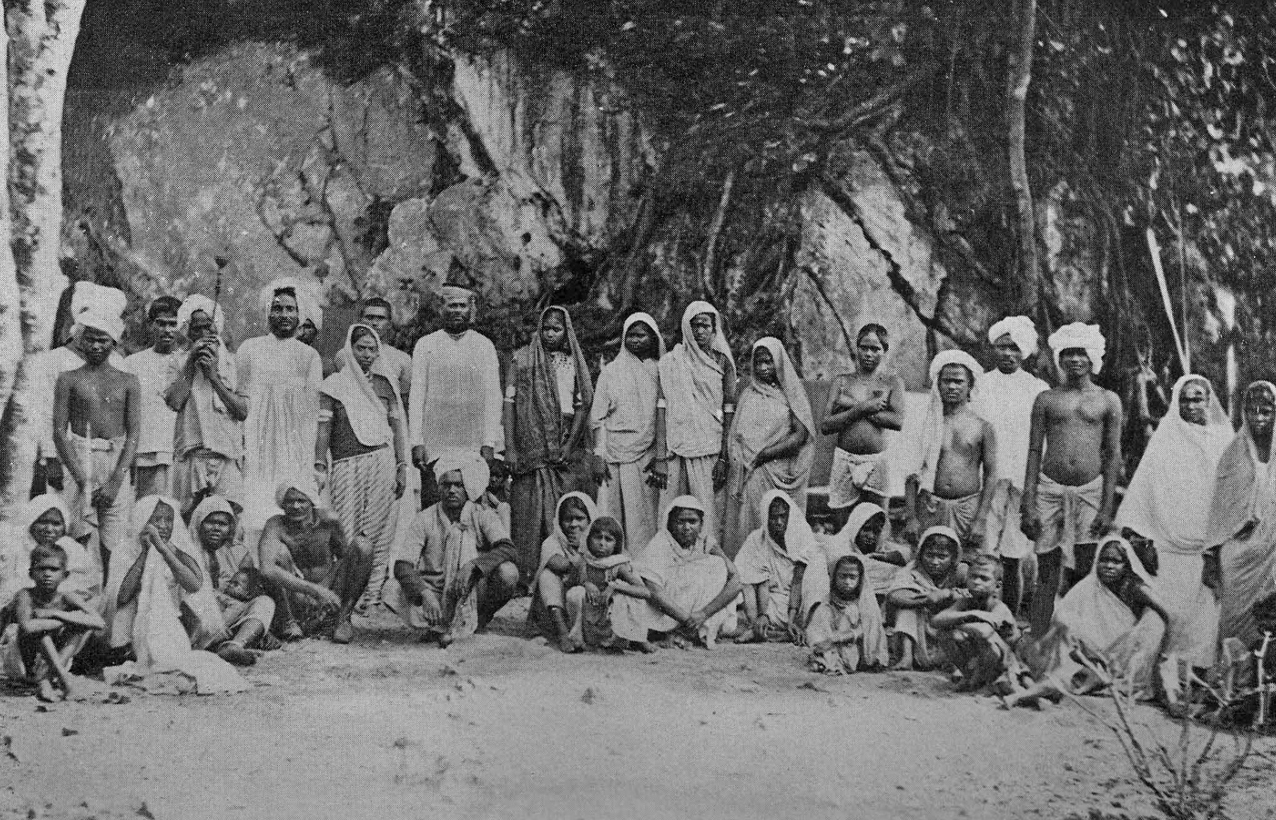
In this course, we will consider postcolonial India from its “margins”, that is, by centering the perspectives of migrant workers, Dalits, women, and/or revolutionaries. We will use the ideas and practices crafted by these groups as our guides in assessing the political record of the Indian state.
While surveying this history, we will also study recent shifts and challenges confronting Indian democracy. Today, India is one of the fastest growing economies; it is also a country with some of the most extreme forms of social inequality. According to a recent report by Oxfam, 10% of the Indian population holds 77% of the country’s national wealth. However, reports of social inequality in India, such as the one cited above, exist alongside celebrations of its status as the “world’s largest democracy” in the national press and in global media. Considering this, what does it mean to call India a “democracy”? How do we assess the successes and failures of Indian democracy?
The challenges we will discuss are not unique to Indian democracy. Democracies everywhere struggle to balance the claims of freedom for individuals with the promise of social equality for all. India’s paradoxical, complex, and contradictory encounter with democracy has produced a rich archive of debate and contestation on this issue. This course will not only introduce you to key events, ideas, and issues shaping postcolonial Indian history, but also provide you with conceptual resources to investigate political ideas like democracy in a global, historical perspective.
Through a combination of secondary texts and a range of primary sources from postcolonial Indian history, we will develop a complex picture of the relationship, often contradictory, between the promises of democracy, development, and decolonization in postcolonial societies. You do not require any prior knowledge of Indian history or languages for this course.
- Teacher: Niharika Yadav

Developmental psychology has generated theories, research evidence, and scientific tools for fostering resilient societies where children and families from diverse backgrounds can thrive. This course will apply insights from developmental psychology to understand major societal trends impacting the developing child, including pandemics, migration, racial justice movements, mental health, and climate change. Students will survey the latest research on these topics and critically analyze every step of the scientific process, from grant funding, to choosing ethical and effective research methods, to the communication of scientific findings to the public and policymakers.
- Teacher: Sarah Gillespie

- Teacher: Brandon Chambers
- Teacher: Georgia Akins
- Teacher: Mary Heskel
- Teacher: Sarah West
- Teacher: Zak Yudhishthu
- Teacher: Arjun Guneratne
- Teacher: MaryBeth Gagner

- Teacher: Jill Fish
- Teacher: Kelly Tuttle

The class meets three times a week with the professor and one extra hour with the Lab Assistant. The labs begin on Tuesday, September 19th. Since the course is interactive, attendance is required for all four sessions, including the Labs.
- Teacher: Fernando Contreras

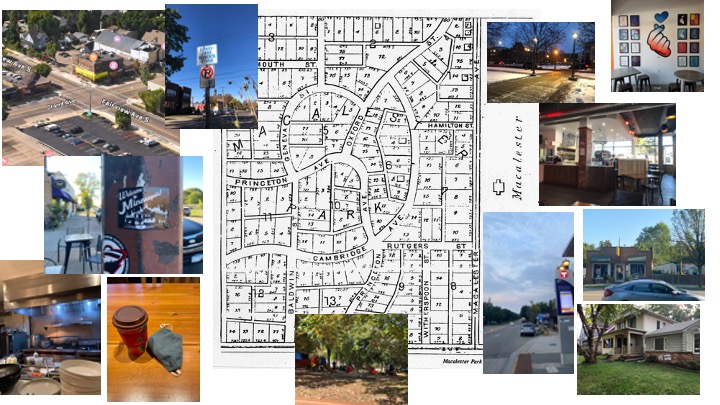
In most sociology classes, we read scholars’ research. In this case, we will learn how to use qualitative research methods and conduct our research in the Macalester – Groveland neighborhood in St. Paul. Each of the group projects will compose a mosaic of the neighborhood where Macalester College is located, including campus locations and the “Macalester bubble.” The thread that will connect your research is the concept “racial grammar” (Bonilla-Silva 2012). By using the same concept, you will learn how to employ theory to analyze empirical data and make an argument. Thus, this course provides you with an opportunity to learn how to collect information and interpret the information. Further, as we will work in small groups throughout the semester, you will hone your group and collaborative skills.
Furthermore, conducting qualitative research often requires a great deal of discussion of the problems, joys, and challenges one faces in the field, which broadens our base of knowledge. We need to listen, devise strategies, and learn about ways others react to similar events or situations we may encounter in the field. Therefore, please feel free to bring up any issues you are experiencing in conducting your research.
- Teacher: Erika Busse-Cárdenas

- Teacher: Serdar Yalçin

- Teacher: James Coplin

We will explore these changes by engaging with sources and scholarship on different genres and mediums of communication ranging from art, architectural practices, music, film, fiction, and ethnography. This course will not only introduce you to critical issues for understanding contemporary South Asia but also to cultural practices and modes of representation unique to the region. By examining the past with an eye to its contemporary relevance, we will investigate why premodern identities and histories remain at the center of debates about politics and culture in contemporary South Asia.
- Teacher: Niharika Yadav

During this course, you will:
1. master concepts and technical vocabulary that will enable you to think clearly about arguments;
2. become proficient at translating sentences from English into formal languages;
3. master basic techniques for testing arguments for validity;
4. develop your pattern recognition skills, which will permit you to tell good arguments and reasoning patterns from bad ones; and
5. explore philosophical questions about logic as well as other philosophical issues arising within our study of logic.
- Teacher: Elliott DeWitte
- Teacher: Max Dresow
- Teacher: Adrien Wright

During this course, you will:
1. master concepts and technical vocabulary that will enable you to think clearly about arguments;
2. become proficient at translating sentences from English into formal languages;
3. master basic techniques for testing arguments for validity;
4. develop your pattern recognition skills, which will permit you to tell good arguments and reasoning patterns from bad ones; and
5. explore philosophical questions about logic as well as other philosophical issues arising within our study of logic.
- Teacher: Elliott DeWitte
- Teacher: Max Dresow
- Teacher: Adrien Wright

- Teacher: Steven Woodward
We will investigate these questions and more as we read poetry, stories, and plays from British history. One of our main tools will be etymology—the study of words and how they developed over time. By investigating the history of words like “man” and “wife”, we will trace meaning and change in both literature and society.
Along the way, we will pay special attention to tracing the footsteps of individuals who were prohibited from participating in mainstream literary society: low-income workers, women, LGBTQ* folk, and BIPOC groups. Literary investigation and etymology will help us learn from our cultural ancestors who lived on the margins of their societies.
- Teacher: Coral Lumbley
As a First-Year Course, this class will familiarize you with college-level materials and methods, including seminar discussions and written analysis. The class will also introduce you to various resources on campus, from health services to tech rentals.
Learning Outcomes:
Develop analytical skills and critical vocabulary using film and text
Generate profound ideas using community knowledge-weaving
Learn how the Middle Ages get translated for modern audiences
Demonstrate understanding in analytic writing and creative film-making
- Teacher: Coral Lumbley

By the end of this course, you will be able to:
1. deploy philosophical resources (concepts, arguments, ways of thinking) to interpret and critique scientific practices and products;
2. recognize the interplay of epistemic and non-epistemic values in scientific practice and especially in scientific controversies;
3. write precise and cogent descriptions of your views on a range of philosophical topics arising from a scrutiny of science and its broader context; and
4. describe the relevance of philosophy of science for important issues in contemporary society.
- Teacher: Max Dresow
This course examines and critically analyzes various approaches to the study of how different individuals and communities in particular historical and cultural scenarios in contemporary Latin America create meanings about their past experience with political violence. The course addresses questions related to the tension between remembering and forgetting, the presence of conflicting memories and truths and how these are negotiated or not through distinct forms of representation. The cultural analysis of different means of representation: human rights and truth commissions’ reports, testimonials, film, art and memorials will be the basis for class discussions on different notions of truth and different forms of truth-telling. A close examination of these forms of representation will reveal the extent to which they can conflict with each other while at the same time feed on each other, creating “effects of truth” and leaving room for secrecy as a mode of truth-telling. Finally, the course will also compel students to think about what the consequences the politics of memory have for the future in Latin America.
The content and discussion in this course will necessarily engage with historical contexts and personal testimonies of violence that include arbitrary arrest and detention, torture, sexual violence, genocide, massacres, extrajudicial execution and disappearances. Much of the material will be emotionally and intellectually challenging to engage with. We will do our best to flag especially graphic or intense content that discusses or represents violence and will do our best to make this classroom a space where we can engage bravely, empathetically and thoughtfully with difficult content every week.
- Teacher: Olga González
This course will take a broad psychological perspective on the questions, “Why are we not doing enough to address global climate change?” and "What will catalyze the social movement necessary to address the issue?" The class will explore psychological theories and studies that help explain why people respond to the climate crisis in the ways they do, and what psychological research tells us about how to shift that response.
- Teacher: Christie Manning

Students will learn about the socio-historical context of each play, and in-
class exercises will introduce them to the foundation of script analysis: they will
examine the play's given circumstances, dialogue, dramatic action, characters, and style. Students will read a new play every week; assignments include weekly in- class writing exercises and short critical papers. This course introduces students to contemporary Indigenous theatre and performance (writ large) produced and performed in what is now known as Canada and the United States, and to the theoretical frames provided by Indigenous scholars and artists to engage with these works. While in no way exhaustive, this broad survey includes theatre, dance, film, and music and begins in the 1960’s and ends with current productions.
- Teacher: Sam Mitchell
Like Latin and Greek in Europe, Sanskrit is a highly inflected language of scholarship, and revered in India as the perfect medium for discourse on everything from science and sex to philosophy and religion. (In modern Hindi, sanskriti means “culture.”) It flourished in its classical form after the age of the Buddha (5th century BC) and served as a scholarly lingua franca in India until the Islamic period and beyond. This course serves as an introduction to the grammar and script of Sanskrit, and we will advance to a point of reading simplified texts from the classical epic Ramayana. Students will be expected to attend class regularly and spend six hours a week outside class studying the grammar and vocabulary. Without this sort of effort, no progress is possible in such a complex language. In addition to the rigorous study of the language, we will consider both the role of the language in classical Indian culture and religion, and some texts from the Ramayana, looking at both English translations and Sanskrit originals.
- Teacher: James Laine
- Teacher: Gina Wood
- Teacher: Brad Belbas

- Teacher: Matt Burgess
- Teacher: Megan Vossler
- Teacher: Erik Davis
- Teacher: Ginny Moran
- Teacher: Myrl Beam
- Teacher: Nora de Rege
This course has been an ongoing experiment. Students have often asked why our department does not offer a basic course on the religions of the world. They have sought a kind of classic survey, to give them a certain cultural literacy in the world’s major religions (on “literacy,” cf. S. Prothero, Religious Literacy. Also look at https://rpl.hds.harvard.edu/what-we-do/our-approach/what-religious-literacy and https://rpl.hds.harvard.edu/what-we-do/our-approach/core-principles as well as the Pew survey http://www.pewforum.org/2010/09/28/u-s-religious-knowledge-survey/). At the same time, several critics have raised questions about the whole project of defining, locating, and comparing the major religious traditions, often accusing the authors of world religions textbooks of western biases and masked theological agendas. Meanwhile, a revised version of Huston Smith’s 1958 book Religions of Man is continually reprinted and continually outsells far more sophisticated textbooks. When reading a world religions textbook, one should ask if the author is trying to make a particular religion look good, or, more likely, trying to make certain versions of all religions look good.
Our goal will be to try to comprehend just what cultural literacy would mean when studying the major religious traditions of the world, while at the same time developing an appreciation for some of the blind spots and problems in this enterprise. To a large extent, we will do some serious construction before we feel ready for de-construction. Most weeks, we will cover one of five major areas (South Asia, East Asia, Judaism, Christianity, Islam) and students will read a different authors’ treatment of this material. We will have a general discussion of the material covered in the variety of books we are considering, to get a sense of the different authors’ choices and to shake our confidence in the idea that there are simple facts that any objective observer would record. At the end of each area, we will have a short quiz on some of the agreed upon “facts.”
The final paper will be the student’s critical reading of their chosen textbook, in light of the issues raised throughout the semester and the questions raised by theorists in the study of religion (e.g.,Masuzawa, Nongbri, Laine et al. …and take a look at Religion for Breakfast: https://religionforbreakfast.com/ .
- Teacher: James Laine
- Teacher: Robert Angarone
- Teacher: Andrew Beveridge
- Teacher: Adam Schroeder
- Teacher: Issaka Van't Hul
- Teacher: Adrien Wright

- Teacher: Tia-Simone Gardner
- Teacher: Walter Greason

Through practiced-based and theoretical work, students will develop the skills to create art and media that challenge and transform existing power dynamics. The course aims to foster a deep understanding of the intersection between cultural production and power, preparing students to become thoughtful and impactful cultural producers.
- Teacher: Tia-Simone Gardner
- Teacher: Randy Reyes
- Teacher: Dave Ehren
- Teacher: Alexander Beaudreau
- Teacher: Paul Herstedt
- Teacher: Kai Sih

- Teacher: Michael Anderson
- Teacher: Julia Brandfonbrener
- Teacher: Anika Bratt
- Teacher: Stotra Chakrabarti

- Teacher: Michael Anderson
- Teacher: Anika Bratt
- Teacher: Seth Lorenzen
- Teacher: Anna Williams
- Teacher: James Doyle
- Teacher: Jess Pearson

- Teacher: Joëlle Vitiello
- Teacher: Reece McKee
- Teacher: William Moseley
- Teacher: Meira Smit

- Teacher: Brigetta Abel
- Teacher: Laurie Adamson
- Teacher: Ellie Barnes
- Teacher: Erin Paradis
- Teacher: kt shorb
- Teacher: Randy Reyes
- Teacher: Cynthia Kauffeld
- Teacher: Earle Cheshire-Wood
- Teacher: Nadya Nedelsky

- Teacher: Jennifer Awes Freeman

- Teacher: James Coplin

- Teacher: Rotem Herrmann
- Teacher: Xinyang Li
- Teacher: Toni Dorca

- Teacher: Niharika Yadav
- Teacher: Andrew Billing
- Teacher: Arthur Mitchell
- Teacher: Rachel Kelly
- Teacher: Satoko Suzuki
- Teacher: Andrea Kaston Tange
- Teacher: Ahoo Najafian

- Teacher: Daniel Coral Reyes

- Teacher: Emily Bruce
- Teacher: Jerald Dosch
- Teacher: Georgia Barnes
- Teacher: Lesley Lavery
- Teacher: Nicholas Schaser
- Teacher: Megan Butler

- Teacher: Jacob Eisensmith
- Teacher: Toni Dorca
- Teacher: Linda Sturtz
- Teacher: Brittany Landorf
- Teacher: Jenna Rice Rahaim
- Teacher: Rebecca Bigler
- Teacher: Myrl Beam
- Teacher: James von Geldern
- Teacher: Eliot Berk
- Teacher: Stotra Chakrabarti
- Teacher: Toni Dorca
- Teacher: Ron Barrett
- Teacher: Randy Reyes

- Teacher: Andrew Beveridge
- Teacher: Alexander Hanhart
- Teacher: Andrew Beveridge
- Teacher: Yariana Diaz
- Teacher: Alexander Hanhart

- Teacher: Tony Siebenaler-Ransom

- Teacher: Michael Anderson
- Teacher: Anika Bratt
- Teacher: Hannah Morrow

- Teacher: Michael Anderson
- Teacher: Anika Bratt
- Teacher: Corinne Byus
- Teacher: Jerald Dosch
- Teacher: Claire Fabian
- Teacher: Lola Leckey
- Teacher: Stellaria Otstot

- Teacher: Michael Anderson
- Teacher: Sarah Bohrer
- Teacher: Anika Bratt
- Teacher: Ruth Dunlap
- Teacher: James Doyle

- Teacher: Joëlle Vitiello
- Teacher: Thomas Durfee

- Teacher: Ernesto Capello
- Teacher: Milo Clarkson
- Teacher: Nadya Nedelsky

- Teacher: Serdar Yalçin
- Teacher: Nicholas Schaser
- Teacher: Satoko Suzuki

- Teacher: Will Mitchell
- Teacher: David Martyn

- Teacher: Daniel Coral Reyes

- Teacher: Libby Shoop
- Teacher: kt shorb
- Teacher: Yariana Diaz
- Teacher: Xavier Haro-Carrión
- Teacher: Oliver Matus-Bond

- Teacher: Mina Kinukawa
- Teacher: kt shorb

- Teacher: Mina Kinukawa
- Teacher: kt shorb

- Teacher: James McConnell
- Teacher: Daniel Trudeau

- Teacher: J. Ernesto Ortiz Díaz
- Teacher: Megan Butler
- Teacher: Andrew Overman

- Teacher: Erik Davis
- Teacher: Ginny Moran
- Teacher: Olga González

- Teacher: Ori Friesen
- Teacher: Kristin Heysse

- Teacher: Andrew Billing
- Teacher: Ginny Moran

What will this Intro to the Library lab cover?
How do I find books and articles I need for my classes? How do I navigate library research at the college level? What resources does the college provide for me that can save me money and time? What do all these different databases even DO? Becoming familiar with Macalester College's online and physical collections during your first semester at college can be a tremendous help later in your academic career. This "lab” is designed to introduce you to college-level research strategies, and complement the many skills you already bring to your academic work. This three-week online "lab" uses Moodle for communications and content.
- Teacher: Samuel Asarnow
- Teacher: Jackie Beckey

- Teacher: Will Mitchell
- Teacher: David Martyn

- Teacher: Jerald Dosch
- Teacher: Taran Palli

The class fulfills the (1) Medieval period requirement for English major, (2) Writers of Color requirement for English major, (3) Internationalism req for the college, (4) WA req for the college.
- Teacher: Coral Lumbley
https://docs.google.com/document/d/19jihnNLQtgclxVFusJ8RaVmZ0IVLMteo4kQzWa3F9WY/edit?usp=sharing
- Teacher: John Kim

- Teacher: Allan Martinez Venegas
Age of Atlantic Revolution - From Stono to Haiti
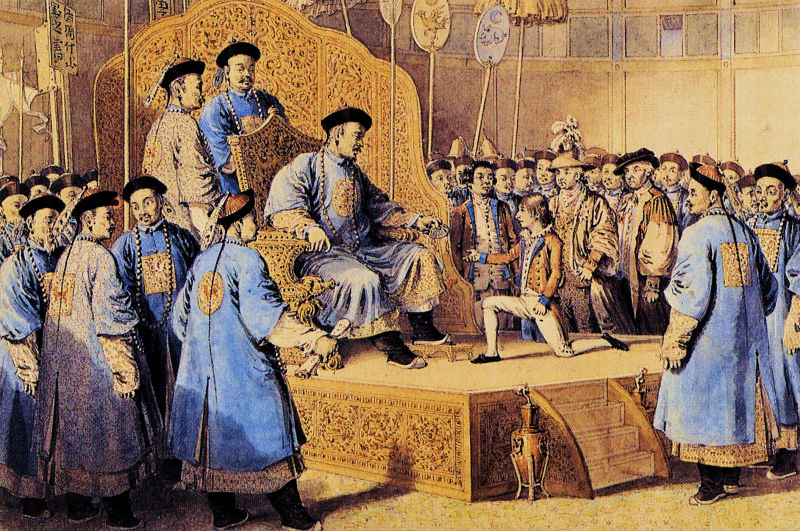
Between 1729 and 1804, people in the interconnected Atlantic world sought to reconfigure social, economic, and political relations through collective resistance and revolution. The most momentous movements were led by subjugated peoples, including enslaved Africans and white workers. This course examines the practices that revolutionaries deployed; how political thought, spiritual beliefs, food diplomacy, and ecological transformation guided actions; and how exiles, refugees, and forcibly transported persons reshaped the wider Atlantic World from New Orleans and Cuba to Sierra Leone and London.
Fields for History Major: Gender; Colonization and Empire; Law and Social Justice; Race and Indigeneity.
Gen Eds: Internationalism
- Teacher: Linda Sturtz
- Teacher: Walter Greason

- Teacher: Ginny Moran
What are the different types of political systems? How did the state evolve? What is the relationship between the structure of political systems and the processes of political action? Are societies lacking political authority vested in an individual or an institution necessarily anarchic? How do different types of political systems maintain social order and resolve disputes? What issues of law and justice arise in plural (multicultural) societies? These are some of the questions that confront the twinned sub-disciplines of political and legal anthropology that we will explore in this course.
While political anthropology is the study of how power is distributed and wielded in a society, the anthropology of law concerns itself with the way social order is maintained and how “law” — as distinct from custom — is formulated and applied. This course examines the meaning of law and politics in cross-cultural perspective. The first half of the course examines how anthropologists have approached the study of politics and the state, from the structural functionalism of the 1940s and 50s to more processual approaches that emphasize the role of agents. In the second half of the course, we examine how people in different places at different times have understood the concept of law, how their understanding has been concretely manifested in the formulation of rules governing social relations and how those rules have been enforced. Role playing in a mock court, where the class puts on trial a Comanche medicine woman for practicing medicine without a license, will be used to understand how law works in a culturally complex society.
- Teacher: Arjun Guneratne

- Teacher: Erika Busse-Cárdenas
- Teacher: Olga González
- Teacher: Vanessa Phelan
- Teacher: Michael Anderson
- Teacher: Jerald Dosch
- Teacher: Taran Palli
- Teacher: Claire Wiley

Course Description and Objectives
SPAN 101 is the first elementary Spanish course in the Department of Spanish and Portuguese. The course objectives are:
a) To introduce students to the Spanish language and culture(s)
b) To help students develop the necessary skills to be able to communicate in Spanish at a novice-mid/novice-high level
c) To acquire proficiency in all four communicative skills: listening, reading, speaking and writing
d) To challenge students to think and react to questions and situations which require them to draw on their own background and experience
e) To begin to familiarize them with the Latinx communities in Minneapolis and Saint Paul
SPAN 101 meets MWF with the instructor. There is one extra hour with the Laboratory Instructor(s). Since the course is interactive, attendance is required and mandatory to all sessions, including the labs.
Note: Spanish and Portuguese Department policy requires that students achieve a grade of C (73%) or higher in order to be able to continue on to the next level (i.e. from SPAN 101 to SPAN 102).
- Teacher: Daniel Coral Reyes

Course Description and Objectives
SPAN 101 is the first elementary Spanish course in the Department of Spanish and Portuguese. The course objectives are:
a) To introduce students to the Spanish language and culture(s)
b) To help students develop the necessary skills to be able to communicate in Spanish at a novice-mid/novice-high level
c) To acquire proficiency in all four communicative skills: listening, reading, speaking and writing
d) To challenge students to think and react to questions and situations which require them to draw on their own background and experience
e) To begin to familiarize them with the Latinx communities in Minneapolis and Saint Paul
SPAN 101 meets MWF with the instructor. There is one extra hour with the Laboratory Instructor(s). Since the course is interactive, attendance is required and mandatory to all sessions, including the labs.
Note: Spanish and Portuguese Department policy requires that students achieve a grade of C (73%) or higher in order to be able to continue on to the next level (i.e. from SPAN 101 to SPAN 102).
- Teacher: Daniel Coral Reyes

- Teacher: Max Dresow

- Teacher: Christine O'Connell

In this course, we will unpack caste as a practice. We will study the ways in which caste works by producing and policing knowledge and by adapting to new historical contexts through its intersections with other hierarchies such as race, gender, and sexuality. We will also track how caste moves across conceptual and physical borders and boundaries. We will scrutinize how knowledge about caste is produced in sources such ethnographies, censuses, and legislation. We will juxtapose these readings with the scholarly and artistic production of anti-caste struggles that have challenged dominant paradigms. In doing so, this course will introduce you to a range of textual and visual archives for examining caste in a global historical context.
Starting in the 19th century, we will study how colonial rule remade existing hierarchies of caste and created possibilities for marginalized communities to resist Brahmanical authority. We will also look at the formation of new caste practices among diasporic communities in the Afro-Caribbean. Finally, we explore the new forms of caste based social mobility and marginalization engendered by contemporary global migrations and movements. In sum, this course will introduce students to new frameworks and primary sources for a global history of caste
- Teacher: Niharika Yadav

- Teacher: Ibrahim Oker

In this course we will examine these and other questions raised by mental disorder and our attempts to understand and treat it. We will also address ethical issues like the social implications of clinical categories, the proper aims of clinical discourse and practice, and the prospects of alternative models (besides the medical model) for conceptualizing mental “dysfunctions.”
- Teacher: Max Dresow

- Teacher: Ibrahim Oker
- Teacher: Walter Greason
- Teacher: Ernesto Capello
- Teacher: Kalei Ganser
- Teacher: Ginny Moran

- Teacher: Erika Busse-Cárdenas
- Teacher: Vanessa Phelan
- Teacher: Khaldoun Samman

- Teacher: Erika Busse-Cárdenas
- Teacher: Vanessa Phelan
- Teacher: Robert Rosen
- Teacher: Summer Hills-Bonczyk
- Teacher: Marie Peterson
- Teacher: Pamela Klasova
- Teacher: Andrew Overman

- Teacher: Ibrahim Oker

This course places a special focus on reading. Students are encouraged and helped to further advance their oral proficiency while developing reading and writing skills. Students learn to expand their speaking repertoire from topics of everyday routines and interest to more intellectually and linguistically challenging topics such as social issues and current events. The combination of writing exercises after each lesson, discussions in class, debates and presentations as a group provides ample of opportunities for students to practice, and improve both language and interpersonal skills.
- Teacher: Pei-Wen Fang
- Teacher: Lulu Qiu
- Teacher: Kerry Alexander
- Teacher: Walter Greason

- Teacher: Robert Angarone
- Teacher: Andrew Beveridge

- Teacher: Stotra Chakrabarti
- Teacher: Yuelia Chang

- Teacher: Michael Anderson
- Teacher: Stotra Chakrabarti
- Teacher: Jerald Dosch
- Teacher: Timna Nevo
- Teacher: Ellie Sablak

- Teacher: Michael Anderson
- Teacher: Anika Bratt
- Teacher: Corinne Byus
- Teacher: Stotra Chakrabarti
- Teacher: Jerald Dosch
- Teacher: Mary Heskel
- Teacher: Thomas Durfee
- Teacher: I-Chun Catherine Chang
- Teacher: Walter Greason
- Teacher: Susanna Drake
- Teacher: Xavier Haro-Carrión
- Teacher: Oliver Matus-Bond
- Teacher: Vanessa Phelan
- Teacher: Khaldoun Samman
- Teacher: Emma Törzs

- Teacher: Matt Burgess
- Teacher: Megan Vossler
- Teacher: Wynn Fricke

- Teacher: Erika Busse-Cárdenas
- Teacher: Kate Nozal
- Teacher: Vanessa Phelan

- Teacher: Daniel Trudeau
- Teacher: Susanna Drake
- Teacher: Ella Ruskusky

- Teacher: Eric Carter
- Teacher: Andrew Billing

- Teacher: Sally Donovan
- Teacher: Mary Heskel
- Teacher: Stellaria Otstot
- Teacher: Alisha Pan
- Teacher: Sarah Wilson

- Teacher: Jana Abu Subha
- Teacher: Michael Anderson
- Teacher: Mary Heskel
- Teacher: Brian Lozenski
- Teacher: Julia Castellano
- Teacher: Tim Delventhal
- Teacher: William Moseley
- Teacher: Thomas Durfee
- Teacher: Julie Dolan
- Teacher: Duchess Harris
- Teacher: I-Chun Catherine Chang
- Teacher: Walter Greason

- Teacher: Laurie Adamson
- Teacher: Maddie Salunga
- Teacher: Beth Severy-Hoven
- Teacher: Susanna Drake
- Teacher: Graham Read
- Teacher: Xavier Haro-Carrión
- Teacher: Oliver Matus-Bond
- Teacher: Khaldoun Samman

- Teacher: Brad Stiffler

- Teacher: Thea Trelstad Pi-Sunyer
- Teacher: Daniel Trudeau
- Teacher: James Coplin

The class fulfills the college-wide requirements in Humanities and Writing as Argument.
- Teacher: Coral Lumbley

- Teacher: Brad Belbas
- Teacher: Alicia Muñoz

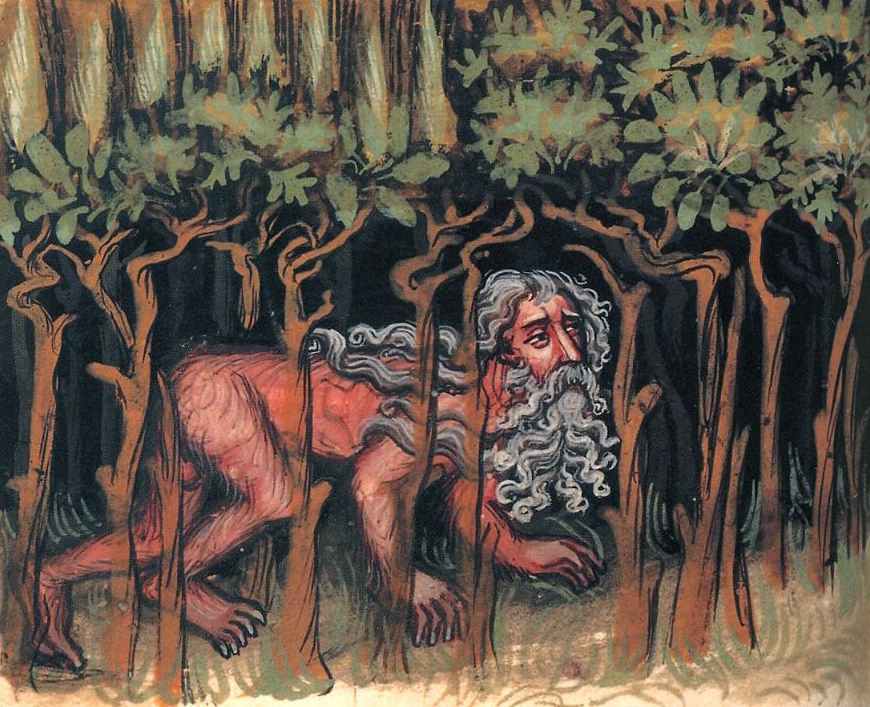
Come learn how Tolkien drew on the Welsh language and medieval Welsh literature to craft the world of Middle-Earth and the language of the Elves. As we read our way through medieval Wales, we will encounter sorcerer-bards, goddesses, magical treasures, and mysterious creatures (who are rarely what they seem). Studying the basics of the Welsh language will allow us to be enchanted by the strange and poignant stories of the Mabinogion and the Book of Taliesin. By the end of the course, we will see why Tolkien believed Welsh to be one of the most beautiful languages in the world.
- Teacher: Coral Lumbley

Welcome to the 2023 - 2024 academic year, writing tutors! We’re thrilled to have each of you as part of this year’s Writing Support cohort in the MAX Center. Your position as a writing tutor is intended to be an ongoing learning experience. We each begin this year together with different sets of experiences–some have been tutoring writing for over a decade, some for several semesters, and some will begin this work for the first time. We’ll bring a variety of expertise, and through collaborative inquiry and reflection, we’ll be prompted to ask questions about and imagine new possibilities for writing and writers.
To that end, Alyssa, Jake, and Britt have designed an education program to help facilitate this learning. Our Learning Outcomes and our Statement of Purpose for Writing (the latter found in the Writing Tutor Manual) inform each month’s theme and corresponding set of motivating questions for us to explore together. We’re excited to embark on this work alongside you.

- Teacher: Brigetta Abel
- Teacher: Cori McKenzie-Read
- Teacher: Jake Mohan